Roofing 101: Taking Care of Your Flat Roof
Congratulations, you’re the proud owner of a flat roof…but now what?
While there may not be as much information out there about flat roofs as shingle or tile, it’s actually the best option for the unforgiving Arizona heat. They are faster to install, easier to maintain, and the white coating will help reflect the sun away from your home (especially if you opt for the UV coating).
That doesn’t mean you’re off the hook, it’s still one of the most crucial parts of your home and will need regular maintenance. Below we’ve outlined some tips on how to take care of your flat roof, how it should look if it’s healthy, and our approach to inspections.
Roofing 101: Taking Care of Your Flat Roof
Congratulations, you’re the proud owner of a flat roof…but now what?
While there may not be as much information out there about flat roofs as shingle or tile, it’s actually the best option for the unforgiving Arizona heat. They are faster to install, easier to maintain, and the white coating will help reflect the sun away from your home (especially if you opt for the UV coating).
That doesn’t mean you’re off the hook, it’s still one of the most crucial parts of your home and will need regular maintenance. Below we’ve outlined some tips on how to take care of your flat roof, how it should look if it’s healthy, and our approach to inspections.
Understanding Your Flat Roof
Understanding Your Flat Roof
Every time we inspect a flat roof, we look for the same things:
Active leaks
Failures at transition points
Head and side laps in need of attention
Depending on the condition of these three areas, that will help us determine your needs. The most common remedy is a simple re-coat. We can also add additional coating to your existing roof and repair any problem areas before you get to the point of needing an entirely new flat roof.
So, do you have any leaks?
We actually start your roof inspection inside your house. If you have an active leak, just remember it may be harder to find than you think. Water coming from your roof doesn’t always travel in a straight line dow, but that does give us a good idea of where to start.
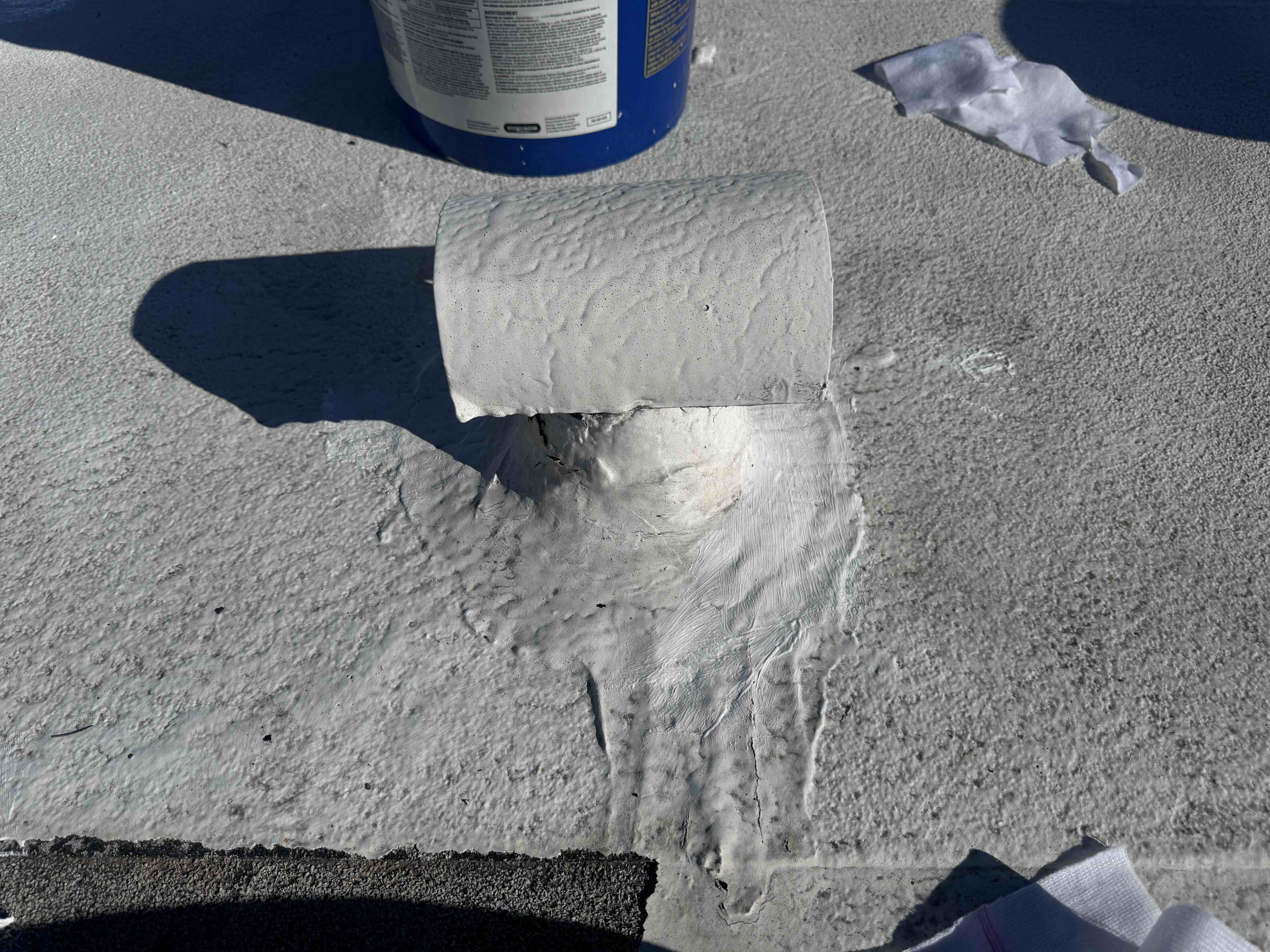
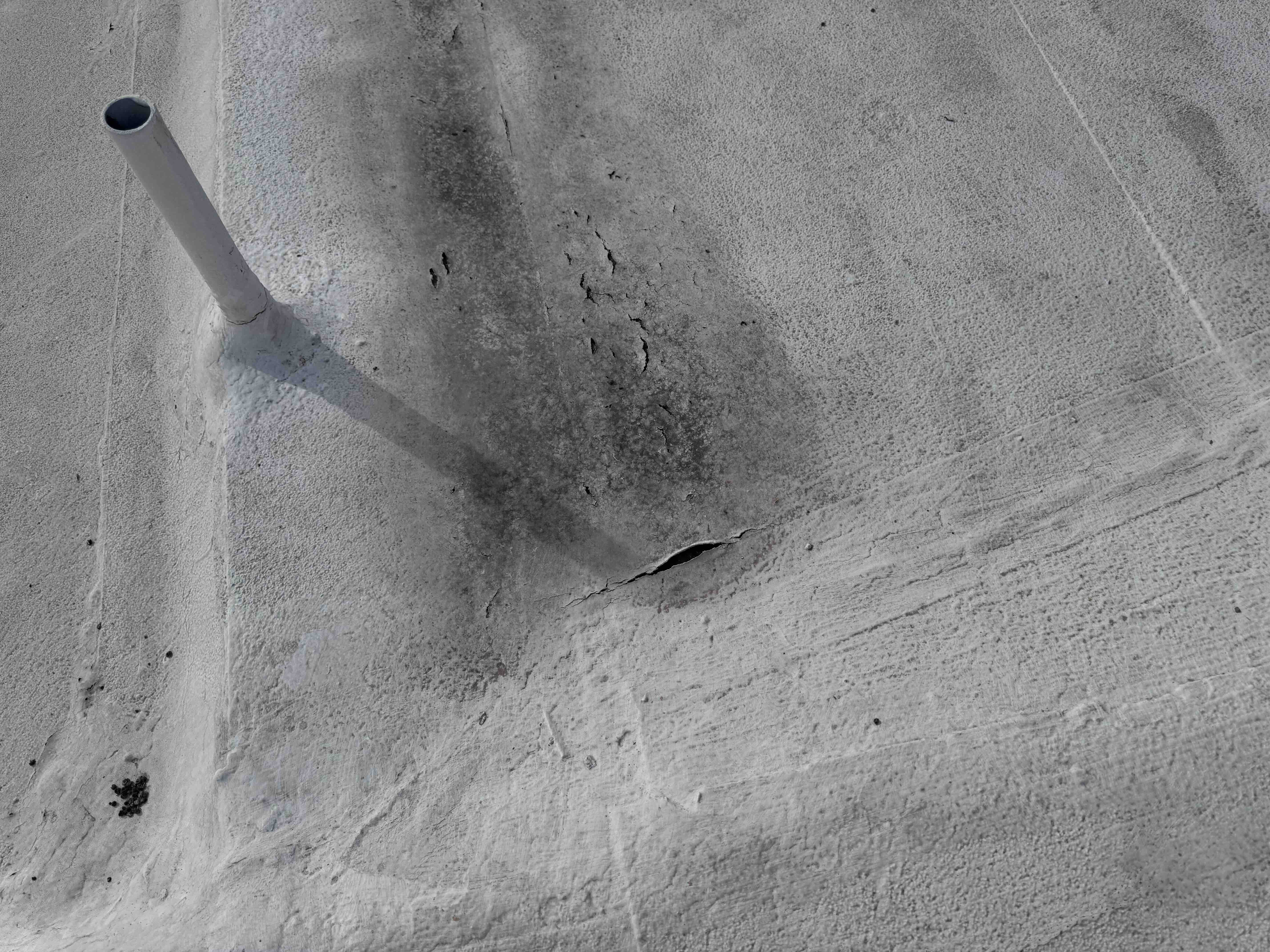
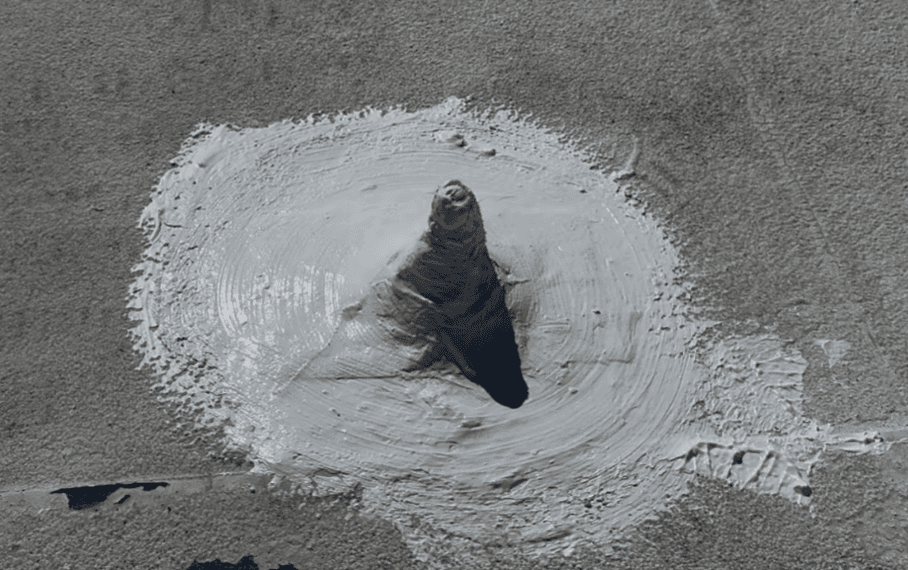
First we need to inspect all pipe penetrations on your roof. These penetrations are typically the source of a lot of leaks on a home.
Cracking at pipe

Every time we inspect a flat roof, we look for the same things:
Active leaks
Failures at transition points
Head and side laps in need of attention
Depending on the condition of these three areas, that will help us determine your needs. The most common remedy is a simple re-coat. We can also add additional coating to your existing roof and repair any problem areas before you get to the point of needing an entirely new flat roof.
So, do you have any leaks?
We actually start your roof inspection inside your house. If you have an active leak, just remember it may be harder to find than you think. Water coming from your roof doesn’t always travel in a straight line dow, but that does give us a good idea of where to start.
First we need to inspect all pipe penetrations on your roof. These penetrations are typically the source of a lot of leaks on a home.
Cracking at pipe
Understanding Your Flat Roof
Every time we inspect a flat roof, we look for the same things:
Active leaks
Failures at transition points
Head and side laps in need of attention
Depending on the condition of these three areas, that will help us determine your needs. The most common remedy is a simple re-coat. We can also add additional coating to your existing roof and repair any problem areas before you get to the point of needing an entirely new flat roof.
So, do you have any leaks?
We actually start your roof inspection inside your house. If you have an active leak, just remember it may be harder to find than you think. Water coming from your roof doesn’t always travel in a straight line dow, but that does give us a good idea of where to start.
First we need to inspect all pipe penetrations on your roof. These penetrations are typically the source of a lot of leaks on a home.
Cracking at pipe
Now we transition
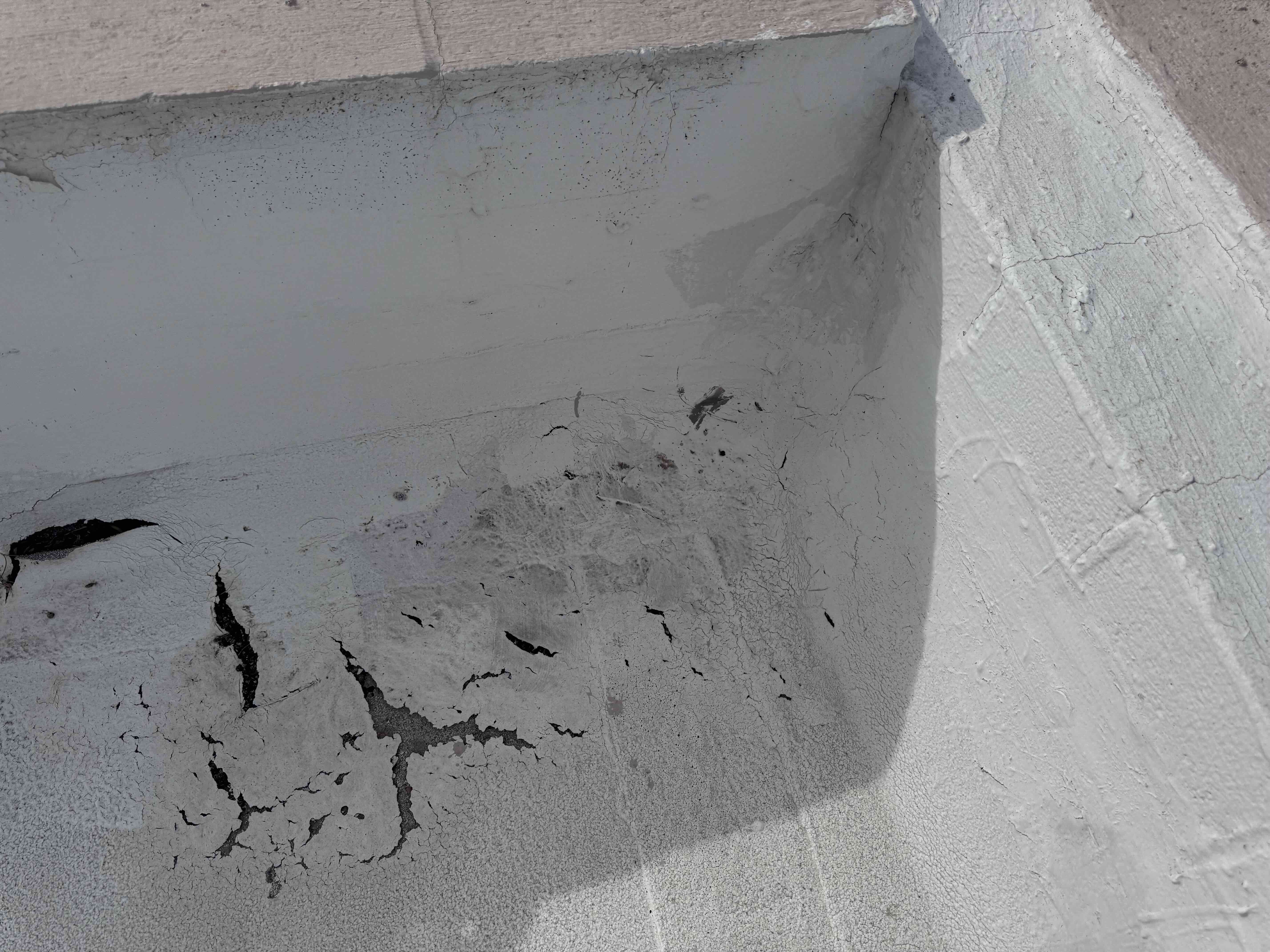
Time to inspect any transition area of material – that could be a stucco parapet wall, tile, shingles, or coated roofing. Your flat roof has a lot of areas susceptible to expansion and contraction, those areas can lead to failure points and future leaks.
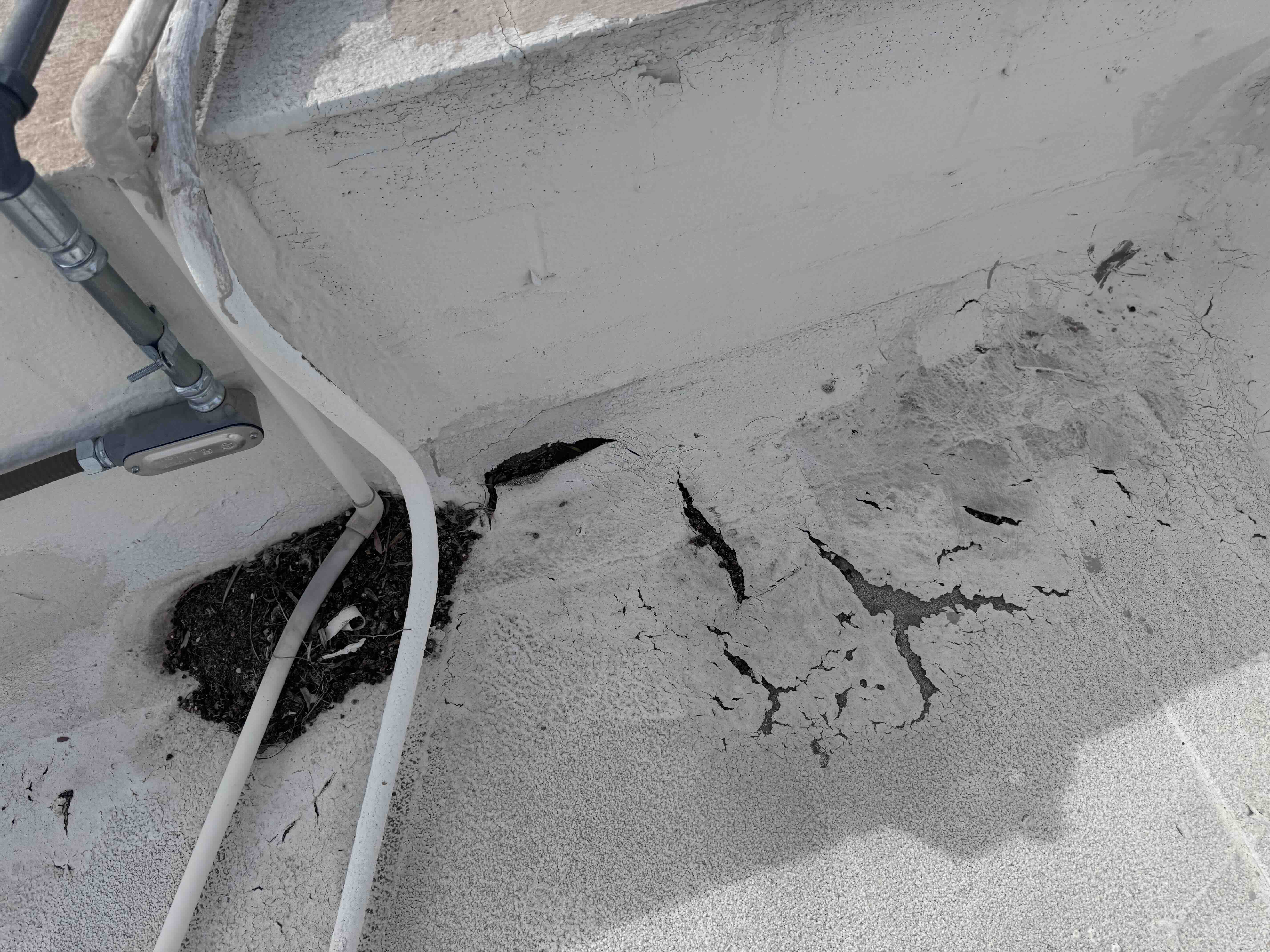
Peeling coating at transition
Now we transition
Time to inspect any transition area of material – that could be a stucco parapet wall, tile, shingles, or coated roofing. Your flat roof has a lot of areas susceptible to expansion and contraction, those areas can lead to failure points and future leaks.
Peeling coating at transition
Now we transition
Time to inspect any transition area of material – that could be a stucco parapet wall, tile, shingles, or coated roofing. Your flat roof has a lot of areas susceptible to expansion and contraction, those areas can lead to failure points and future leaks.
Peeling coating at transition
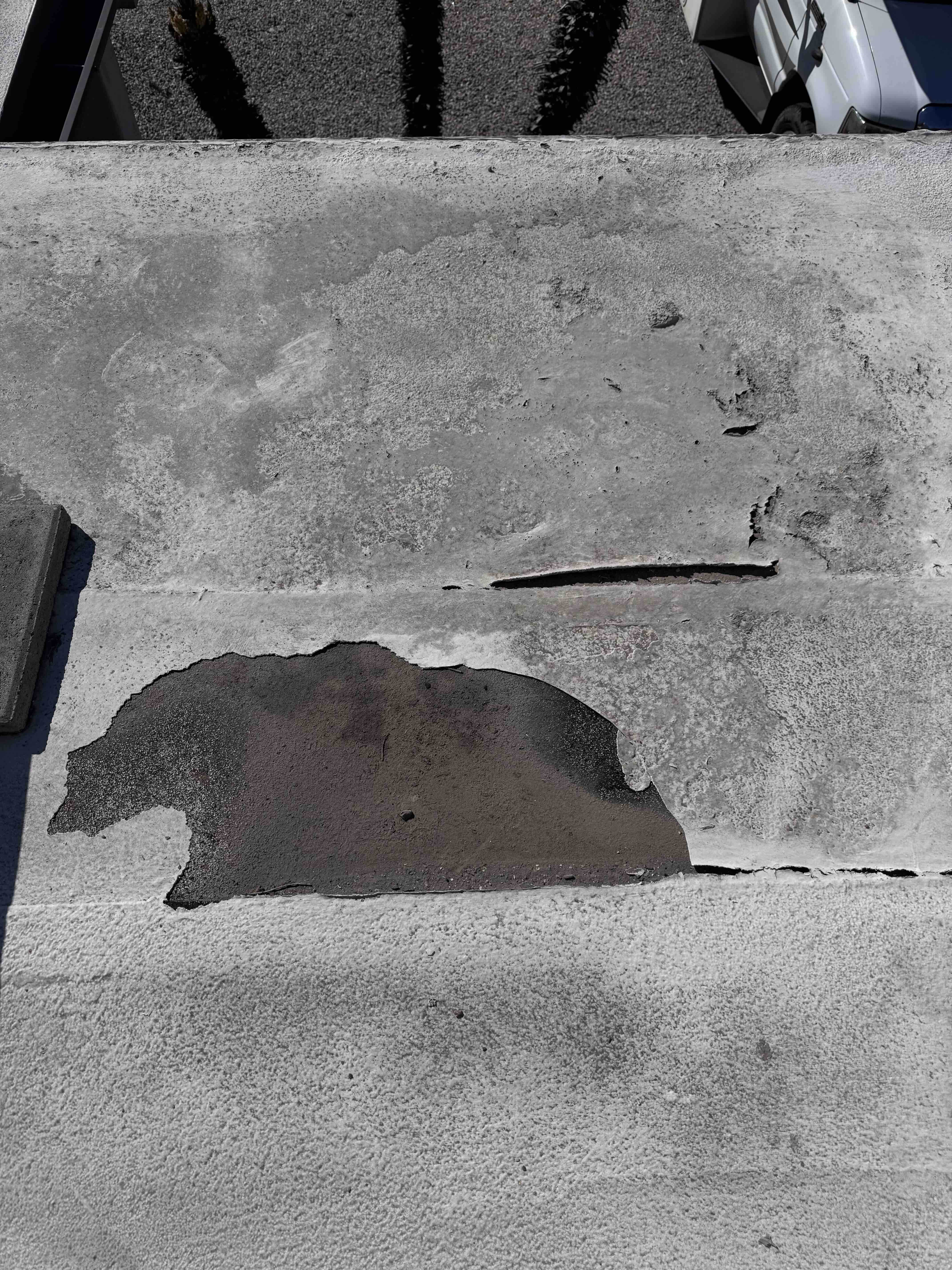
Failure at head lap
What’s in a head lap?
After we have inspected transition areas, we want to inspect the head laps and side laps if you have a rolled roofing system. These areas are prone to failure for the same reason your transitions are.
Failure at head lap
What’s in a head lap?
After we have inspected transition areas, we want to inspect the head laps and side laps if you have a rolled roofing system. These areas are prone to failure for the same reason your transitions are.
Failure at head lap
What’s in a head lap?
After we have inspected transition areas, we want to inspect the head laps and side laps if you have a rolled roofing system. These areas are prone to failure for the same reason your transitions are.
Once we have inspected all of those areas, we will do a general overview of the roof, making sure there are no holes, tears, or cuts. We want to be absolutely certain there are no areas that need additional attention before we apply a new coat to your flat roof.
Once we have inspected all of those areas, we will do a general overview of the roof, making sure there are no holes, tears, or cuts. We want to be absolutely certain there are no areas that need additional attention before we apply a new coat to your flat roof.
Once we have inspected all of those areas, we will do a general overview of the roof, making sure there are no holes, tears, or cuts. We want to be absolutely certain there are no areas that need additional attention before we apply a new coat to your flat roof.
So…what if I need a new roof?
Don’t worry, JDL Roofing has your back – and here is why we’re different.
We record every single inspection we do. This transparency doesn’t just give you peace of mind, it also helps back up your warranty – saving everyone time and, more importantly, reducing costs for you.
So obviously the rest of this inspection is super high-tech, complicated, and time consuming right?
We actually just drag fishing scale across your roof to make sure we are getting at least two pounds per linear inch to ensure that the coating is going to stick and last.
It’s called a pull test, and we do it to every roof we inspect. This helps us do a few things: determine the system of your flat roof with absolute certainty, make a decision of what the most cost-effective solution is for your roof, and ensure you get the best warranty possible.
Now, about that warranty. In order to qualify for a 15 year warranty from the manufacturers, they require us to ensure surface of your roof can actually be coated. There are some roofing systems that just can’t be coated over, and they want us as the contractor to make sure we are doing it right.
What happens if the pull test fails, and what does it do to the price?
A lot of times if a pull test fails on your roof, it is for a few simple reasons:
Reason 1: The roof is going to require some kind of cleaning agent or a good pressure wash.
Reason 2: The roof has silicone on it. In this case, we most likely would’ve caught it at the time of the inspection and won’t even conduct a pull test.
Reason 3: And the most common — you just need a primer to help with adhesion.
Very rarely do the pull tests result in failures, but it is important to note that it can happen. If you are using the right company, you should not be surprised in any way, and any of these reasons are non-issues.
So…what if I need a new roof?
Don’t worry, JDL Roofing has your back – and here is why we’re different.
We record every single inspection we do. This transparency doesn’t just give you peace of mind, it also helps back up your warranty – saving everyone time and, more importantly, reducing costs for you.
So obviously the rest of this inspection is super high-tech, complicated, and time consuming right?
We actually just drag fishing scale across your roof to make sure we are getting at least two pounds per linear inch to ensure that the coating is going to stick and last.
It’s called a pull test, and we do it to every roof we inspect. This helps us do a few things: determine the system of your flat roof with absolute certainty, make a decision of what the most cost-effective solution is for your roof, and ensure you get the best warranty possible.
Now, about that warranty. In order to qualify for a 15 year warranty from the manufacturers, they require us to ensure surface of your roof can actually be coated. There are some roofing systems that just can’t be coated over, and they want us as the contractor to make sure we are doing it right.
What happens if the pull test fails, and what does it do to the price?
A lot of times if a pull test fails on your roof, it is for a few simple reasons:
Reason 1: The roof is going to require some kind of cleaning agent or a good pressure wash.
Reason 2: The roof has silicone on it. In this case, we most likely would’ve caught it at the time of the inspection and won’;t even conduct a pull test.
Reason 3: And the most common — you just need a primer to help with adhesion.
Very rarely do the pull tests result in failures, but it is important to note that it can happen. If you are using the right company, you should not be surprised in any way, and any of these reasons are non-issues.
So…what if I need a new roof?
Don’t worry, JDL Roofing has your back – and here is why we’re different.
We record every single inspection we do. This transparency doesn’t just give you peace of mind, it also helps back up your warranty – saving everyone time and, more importantly, reducing costs for you.
So obviously the rest of this inspection is super high-tech, complicated, and time consuming right?
We actually just drag fishing scale across your roof to make sure we are getting at least two pounds per linear inch to ensure that the coating is going to stick and last.
It’s called a pull test, and we do it to every roof we inspect. This helps us do a few things: determine the system of your flat roof with absolute certainty, make a decision of what the most cost-effective solution is for your roof, and ensure you get the best warranty possible.
Now, about that warranty. In order to qualify for a 15 year warranty from the manufacturers, they require us to ensure surface of your roof can actually be coated. There are some roofing systems that just can’t be coated over, and they want us as the contractor to make sure we are doing it right.
What happens if the pull test fails, and what does it do to the price?
A lot of times if a pull test fails on your roof, it is for a few simple reasons:
Reason 1: The roof is going to require some kind of cleaning agent or a good pressure wash.
Reason 2: The roof has silicone on it. In this case, we most likely would’ve caught it at the time of the inspection and won’t even conduct a pull test.
Reason 3: And the most common — you just need a primer to help with adhesion.
Very rarely do the pull tests result in failures, but it is important to note that it can happen. If you are using the right company, you should not be surprised in any way, and any of these reasons are non-issues.
How Flat Roof Coatings Actually Work (and How to Do Them Right)
Next, we are going to prep the roof with a power washer. Any company out there offering a manufacturer warranty is going to require that the roof be washed, and a lot of companies use pressure washers with a cleaner. Washing the roof removes all the dirt and grime that has built up on your roof over the years and provides for the best possible adhesion.
This also allows us to see and mark any areas where ponding water happens. Being able to spot these ponding areas allows the roofer to make sure these areas are addressed with more detail. Depending on your roof size and how dirty it is, washing can usually take a few hours.
Then your roof needs to dry. This can take a few days to ensure all moisture is out of the roof, or just a few hours depending on the temperature. Since we’re in Arizona, it shouldn’t take more than one full day – but again, we need to slow down and make sure coating is not being applied too soon.
Next, we are going to prep the roof with a power washer. Any company out there offering a manufacturer warranty is going to require that the roof be washed, and a lot of companies use pressure washers with a cleaner. Washing the roof removes all the dirt and grime that has built up on your roof over the years and provides for the best possible adhesion.
This also allows us to see and mark any areas where ponding water happens. Being able to spot these ponding areas allows the roofer to make sure these areas are addressed with more detail. Depending on your roof size and how dirty it is, washing can usually take a few hours.
Then your roof needs to dry. This can take a few days to ensure all moisture is out of the roof, or just a few hours depending on the temperature. Since we’re in Arizona, it shouldn’t take more than one full day – but again, we need to slow down and make sure coating is not being applied too soon.
Next, we are going to prep the roof with a power washer. Any company out there offering a manufacturer warranty is going to require that the roof be washed, and a lot of companies use pressure washers with a cleaner. Washing the roof removes all the dirt and grime that has built up on your roof over the years and provides for the best possible adhesion.
This also allows us to see and mark any areas where ponding water happens. Being able to spot these ponding areas allows the roofer to make sure these areas are addressed with more detail. Depending on your roof size and how dirty it is, washing can usually take a few hours.
Then your roof needs to dry. This can take a few days to ensure all moisture is out of the roof, or just a few hours depending on the temperature. Since we’re in Arizona, it shouldn’t take more than one full day – but again, we need to slow down and make sure coating is not being applied too soon.
Roof is washed and dried – now do we coat?
Roof is washed and dried – now do we coat?
Roof is washed and dried – now do we coat?
Not quite, we want to get this right.
This is the stage where a lot of companies get it wrong and just start coating the roof – but we want to be 100% certain your roof is ready. So what we do next is inspect the roof again, this time focusing on all the small details and prep work.
After power washing the roof, a lot of small problem areas are revealed that were once hidden by dirt and debris, or simply because the pressure washer washed away coating that was already failing. At this point all these areas need to be addressed in a couple of ways.
If there is any metal that has rust on it, that needs to be scrubbed and a special primer needs to be applied. If there is exposed asphalt material, an extra layer of primer should be applied in that area also.
At this time, all side laps and head laps on a rolled roofing system are going to be three-coursed — layer of coating or primer, layer of polyester fabric, and then once dried, coated again. Same applies to all pipes and corners on your flat roof. This ensures they last and allows the manufacturer to provide a better warranty.
Not quite, we want to get this right.
This is the stage where a lot of companies get it wrong and just start coating the roof – but we want to be 100% certain your roof is ready. So what we do next is inspect the roof again, this time focusing on all the small details and prep work.
After power washing the roof, a lot of small problem areas are revealed that were once hidden by dirt and debris, or simply because the pressure washer washed away coating that was already failing. At this point all these areas need to be addressed in a couple of ways.
If there is any metal that has rust on it, that needs to be scrubbed and a special primer needs to be applied. If there is exposed asphalt material, an extra layer of primer should be applied in that area also.
At this time, all side laps and head laps on a rolled roofing system are going to be three-coursed — layer of coating or primer, layer of polyester fabric, and then once dried, coated again. Same applies to all pipes and corners on your flat roof. This ensures they last and allows the manufacturer to provide a better warranty.
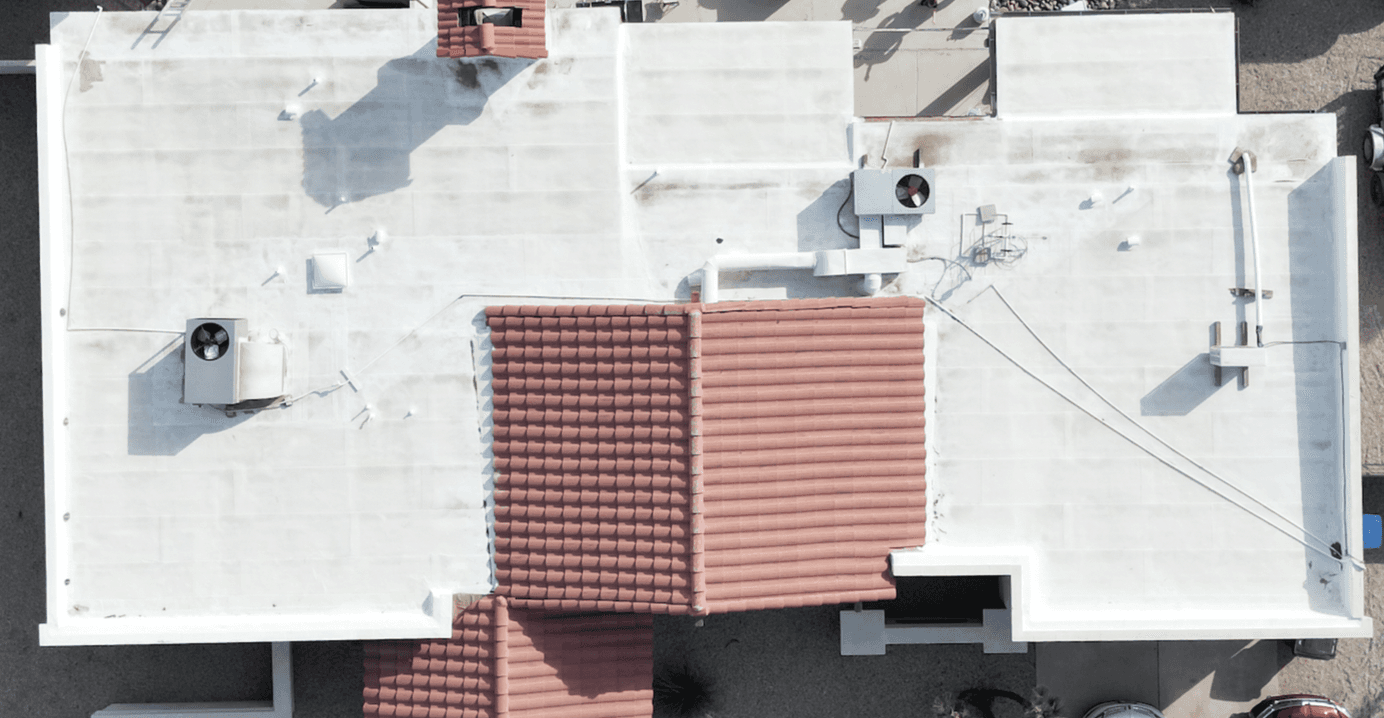
Dirt and grime
Before
Dirt and grime can build up over the years and hide potential leaks, failures at transition points, or issues with your head/side laps.
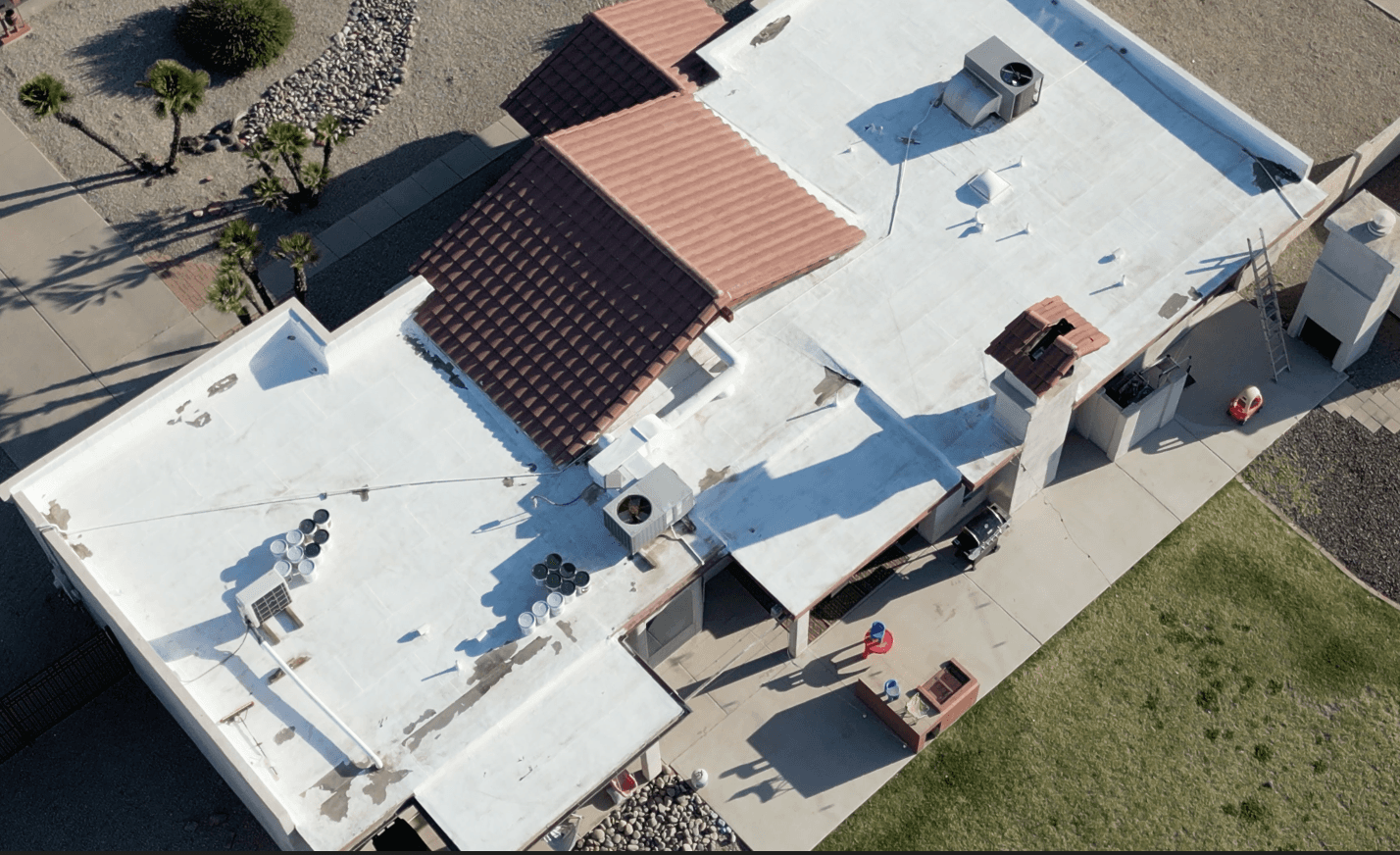
Old Coating Washed Off
Cleaned
After an inspection we power wash your roof. Black areas are where previously installed coating was improperly installed and then washed off.
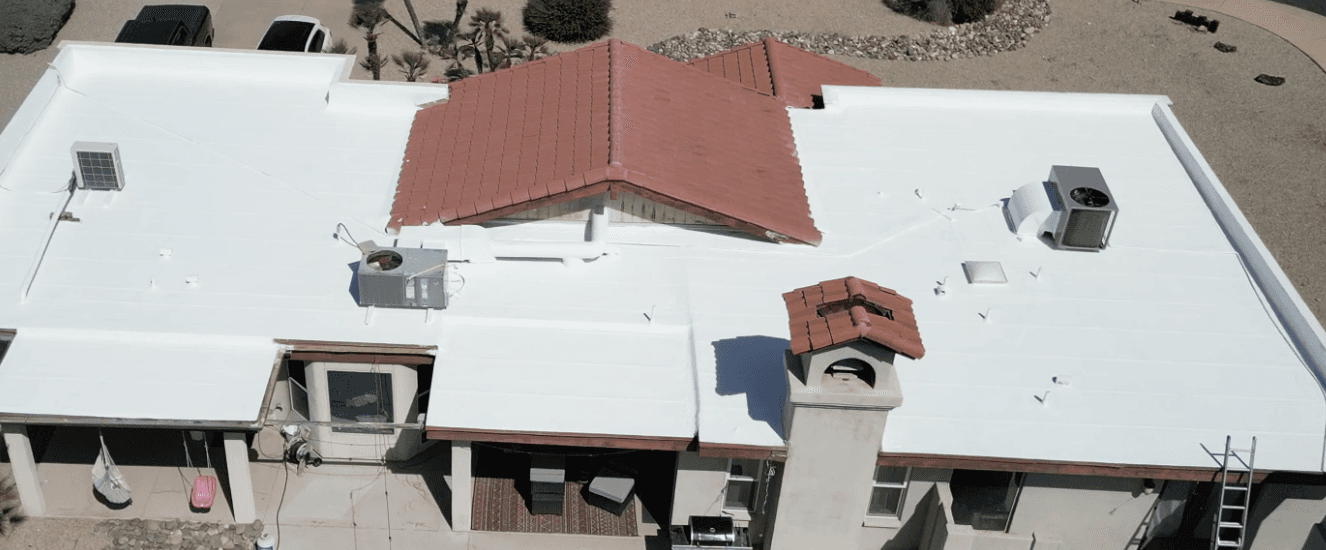
Brand New (Again)
After
Cleaned, installed correctly, and ready to help you cut energy costs just in time for summer – not to mention your new 15 year warranty.
Now that my roof is washed, dry, and all the small details are addressed, do we coat the roof?
Now that my roof is washed, dry, and all the small details are addressed, do we coat the roof?
The time has finally come. Now we coat the roof.
This is normally done in two passes:
First pass is north to south. Depending on the roof surface, you normally do this with a primer or, if it is new spray foam, layers of top coat at the rate of 1.5 gallons per square. JDL does primer on every roof.
Then on the second pass, east to west, apply another coat at the same rate of 1.5 gallons per square. This will leave you with 3 gallons per square foot on your new roof, allowing most manufacturers to offer a 15–20 year material warranty, with most contractors offering a 2–5 year workmanship warranty.
The time has finally come. Now we coat the roof.
This is normally done in two passes:
First pass is north to south. Depending on the roof surface, you normally do this with a primer or, if it is new spray foam, layers of top coat at the rate of 1.5 gallons per square. JDL does primer on every roof.
Then on the second pass, east to west, apply another coat at the same rate of 1.5 gallons per square. This will leave you with 3 gallons per square foot on your new roof, allowing most manufacturers to offer a 15–20 year material warranty, with most contractors offering a 2–5 year workmanship warranty.
Maintaining and Protecting Your Flat Roof for the Long Haul
Maintaining and Protecting Your Flat Roof for the Long Haul
Sweet, now that we are all done with all the steps, I just have to wait 15–20 years and do this again, right?
Not quite.
Everything you own that has a warranty requires regular maintenance of some kind. Think about your roof like your car – only, instead of taking it in for an oil change every 5,000 miles, you need to have your roof maintained on a semi-consistent basis.
Some companies offer an annual inspection and small repair plan for a small fee, others will just work the cost of that into their quote price. Any company that tells you that there is no maintenance is not shooting you straight so make sure to read the fine print.
Here are example warranty documents for some of the top coating manufacturers:
THE WARRANTY
GAF Materials LLC ("GAF") warrants to you that the GAF roof coatings (the “Products”) will not leak as a result of a manufacturing defect for the period noted below so long as the Products are installed in accordance with the applicable published application instructions and during the shelf life set forth on the product label or container. Kymax® roof coating as well as GAF wall and architectural coatings are covered under separate warranties. See gaf.com for complete coverage and restrictions.
WHO IS COVERED BY
THIS LIMITED WARRANTY;
NON-ASSIGNABILITY
You are covered by this limited warranty if (a) you are the installer of the Products and the installation is ongoing or (b) you are the original owner of the property on which the Products are installed and the installation is complete. This limited warranty is NOT TRANSFERABLE OR ASSIGNABLE by contract or by operation of law, either directly or indirectly.
So in conclusion, your flat roof will serve you well during the harsh Arizona summers but it’s not all sunshine and rainbows either.
Just like with anything, regularly inspecting your roof and taking care of it will extend it’s life and give you the most bang for your buck.
Hopefully this has helped add some clarity to this process so you can make a well-informed decision that makes the most sense for you and your family.
And if you ever need a hand, just give us a call – we’re happy to happy! We’ll even invite you up on the roof with us to give you a hands-on tour if you want (just make sure you pull up your own ladder).
So in conclusion, your flat roof will serve you well during the harsh Arizona summers but it’s not all sunshine and rainbows either.
Just like with anything, regularly inspecting your roof and taking care of it will extend it’s life and give you the most bang for your buck.
Hopefully this has helped add some clarity to this process so you can make a well-informed decision that makes the most sense for you and your family.
And if you ever need a hand, just give us a call – we’re happy to happy! We’ll even invite you up on the roof with us to give you a hands-on tour if you want (just make sure you pull up your own ladder).
Get a Free Consultation
Whether something is wrong or you just think it's time for someone to hop on your roof and take a look around, we're happy to help. Our people-first promise means we won't pressure you into ever paying for something you don't need.
Get a Free Consultation
Whether something is wrong or you just think it's time for someone to hop on your roof and take a look around, we're happy to help. Our people-first promise means we won't pressure you into ever paying for something you don't need.
Get a Free Consultation
Whether something is wrong or you just think it's time for someone to hop on your roof and take a look around, we're happy to help. Our people-first promise means we won't pressure you into ever paying for something you don't need.